Robert Yang

AI strategy · workflow design · implementation

AI isn’t a tools problem.
It’s a workflow design problem.

Most businesses are experimenting with AI without changing how the work actually gets done.

I help expert-led professional-services businesses identify where AI can create meaningful economic value, design the workflow around it, and determine the clearest path to implementation.

The technology comes later.

Book an AI Workflow DiagnosticFixed fee: $950 · Remote working session

01 — A client result

One week became 15–30 minutes.

An experienced recruiter was spending as much as a week researching, qualifying, and enriching a list of 50 candidates.

Together, we examined how the work was being done, identified where time was being lost, and redesigned the process using reusable Claude workflows and AI skills.

AI now performs much of the repetitive research and enrichment. The recruiter retains control over search strategy, candidate judgment, and outreach.

The result is not simply faster work. It is greater capacity to pursue difficult searches, reach qualified candidates sooner, and improve the system over time.

“I’ve already identified candidates for difficult-to-fill roles and started conversations with them.”

The workflow was specific to recruiting. The underlying opportunity exists wherever valuable expertise is surrounded by expensive, repetitive knowledge work.

02 — Point of view

More tools won’t fix the way your business operates.

AI adoption often begins with software.

A company buys licenses, experiments with prompts, watches impressive demonstrations, and waits for productivity to improve.

Usually, very little changes.

The problem is not a lack of capability. It is that the technology has not been designed into the way the work actually happens.

I believe

Outcomes come before tools.

The first question is not which model, platform, or agent to use. It is what needs to become faster, better, more consistent, or newly possible.

Workflow comes before automation.

Automating a poorly understood process usually makes its problems harder to see and more expensive to correct.

Human judgment must be designed deliberately.

The goal is not to remove people from valuable work. It is to decide which activities require experience, context, relationships, and taste—and which do not.

AI must earn its place.

A technically impressive system is not necessarily a valuable one. The opportunity has to justify the cost, disruption, and responsibility of implementation.

Sometimes the right answer is a Claude workflow, a reusable skill, an automation, an agent, or a small custom system.

Sometimes the right answer is not AI.

The technology is simply the implementation. The real work is designing a better way to operate.

03 — Who this is for

Businesses whose expertise is the product.

I work with established professionals and small teams whose businesses depend on knowledge, judgment, research, and communication.

They are often consultancies, recruiting firms, agencies, studios, or specialized service businesses.

Their industries differ, but their economics are similar:

This work is a good fit if you have an important workflow, constraint, or opportunity to examine—and you are prepared to invest when the potential return warrants it.

It is probably not the right fit if you are looking for a general introduction to AI, a collection of prompts, or someone to implement a tool you have already selected without first examining the problem.

04 — The first step

AI Workflow Diagnostic

Before recommending a solution, I need to understand the situation.

The AI Workflow Diagnostic is a focused, paid examination of one meaningful business workflow, constraint, or opportunity.

Together, we will determine

  • What business outcome matters
  • How the work happens today
  • Where time, attention, or information is being lost
  • Where AI might create meaningful leverage
  • Which decisions should remain human
  • Whether the opportunity justifies implementation
  • What the clearest next step should be

This is a working conversation, not a presentation.

You do not need to arrive knowing which AI tools you want. You need to bring a real business problem and be prepared to examine it honestly.

What you will leave knowing

By the end of the engagement, you should have clear answers to five questions:

  1. 01Where is the strongest opportunity?
  2. 02What could improving it be worth?
  3. 03What should the future workflow accomplish?
  4. 04What should—and should not—be automated?
  5. 05What should happen next?

Following the session, you will receive a concise written diagnosis covering the opportunity, proposed workflow, business case, important risks, and recommended next step.

The diagnosis is yours whether or not we continue working together.

Engagement details

Fixed fee
$950
Format
Remote
Working session
Up to two hours
Written diagnosis
Delivered within two business days

05 — How the work progresses

Diagnose before prescribing.

The diagnostic is the first step because the appropriate solution cannot be known in advance.

From there, the work may progress through four stages.

  1. 01

    Diagnose

    Identify the opportunity, clarify the desired outcome, and determine whether the potential value justifies further investment.

  2. 02

    Design

    Define the future workflow, human responsibilities, system behavior, information requirements, safeguards, and measures of success.

  3. 03

    Build

    Create and test the workflows, reusable skills, automations, agents, or custom systems required to put the design into practice.

  4. 04

    Improve

    Measure how the system performs in real work, correct its weaknesses, and expand it only where further value is evident.

Not every client proceeds through every stage.

Some leave the diagnostic with enough clarity to move forward themselves. Others discover that the opportunity is smaller than expected or that AI is not the right answer.

When implementation is justified, I will present a small number of ways we might proceed. Each option will reflect the value, ambition, risk, and level of support involved.

No predefined implementation packages. No pressure to continue.

06 — The method

Begin with the business.

Technology changes quickly. The questions used to evaluate it are more durable.

What outcome matters?

What needs to become faster, better, more reliable, or newly possible?

What is the work really costing?

How much time, attention, delay, inconsistency, or missed opportunity is embedded in the current process?

Where is judgment essential?

Which decisions depend on experience, context, trust, relationships, or taste?

Where is the repetition?

Which parts of the work can be structured, accelerated, delegated, or made reusable?

What would success look like?

How will we know the new workflow is creating value rather than merely producing activity?

This is the discipline that separates an interesting AI demonstration from an operating improvement.

07 — About

I’m Robert Yang.
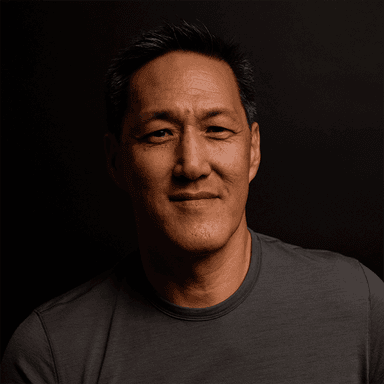
Robert Yang
AI strategy & workflow design
Remote · Two-hour diagnostic

I have spent three decades designing systems that connect technology with how people actually work.

My career has moved through architecture, video games, web applications, and now AI. The material kept changing, but the work remained remarkably consistent: understanding what people are trying to accomplish, designing a system around them, and making the result useful in practice.

I work at the intersection of art, technology, and business—the craft of how something is made, the systems that make it work, and the outcome it has to earn.

That background is why I do not begin AI engagements with software.

Technology that ignores the people, workflow, and economics of the business gets abandoned, no matter how impressive it appears in a demonstration.

08 — Client experience

“I didn’t just leave with a solution. I left with a new skill.”

Working with Robert changed how I approach recruiting.

Before, generating a list of 50 qualified candidates could take me a week of manual work. Today, using the Claude workflows and reusable AI skills we built together, I can produce that same list in 15–30 minutes—even with candidate enrichment.

I’ve already identified candidates for difficult-to-fill roles and started conversations with them.

What made the biggest difference wasn’t learning another AI tool. Robert helped me build workflows around my actual recruiting process and taught me how to improve them myself.

I didn’t just leave with a solution—I left with a new skill.

09 — Fit

A useful engagement requires the right conditions.

Before booking, consider the following:

Is there a real business outcome?

“I want to understand AI” is not yet a business outcome.

“I want to reduce the research required to prepare a client recommendation” gives us something meaningful to examine.

Is the workflow valuable enough to matter?

The strongest opportunities usually involve recurring work, constrained capacity, important decisions, or delays that affect revenue and client service.

Can you act on what we discover?

You should have the authority, budget, or internal support required to proceed if the diagnostic reveals a compelling business case.

Are you open to an unexpected answer?

The best recommendation may not resemble the solution you initially imagined. It may be smaller, larger, simpler, or unrelated to the tool you expected to use.

If these conditions are present, we are likely to have a productive conversation.

10 — Common questions

Do I need technical or AI expertise?

No.

You need to understand your business and the work you want to improve. Translating that context into a viable technical direction is part of my role.

Can members of my team participate?

Yes.

The most useful participants are people who understand the workflow, experience the problem directly, or have authority over implementation.

Is implementation included?

No.

The diagnostic identifies and evaluates the opportunity. It may include a proposed workflow and technical direction, but it does not include building a production system.

If implementation is warranted, it will be scoped and priced separately.

What if AI is not the right solution?

Then the diagnostic has done its job.

Determining that an investment should not be made can be as valuable as identifying one that should.

What information should I bring?

You should be prepared to discuss:

  • The outcome you want
  • How the work is currently performed
  • Who is involved
  • Where the greatest friction occurs
  • What the problem costs
  • What you have already tried
  • What would make solving it worthwhile

If sensitive or proprietary information is involved, contact me before booking so we can establish appropriate boundaries.

11 — Next step

Start with the right question.

Not

Which AI tool should we buy?

But

Where could AI materially improve the way this business operates?

Bring one meaningful workflow, constraint, or opportunity.

We will determine whether a credible business case exists, what a better way of working might look like, and what should happen next.

Book an AI Workflow DiagnosticFixed fee: $950 · Remote · Written diagnosis includedHave a question about fit?